WTA rolls out one-time SRY gene test for players
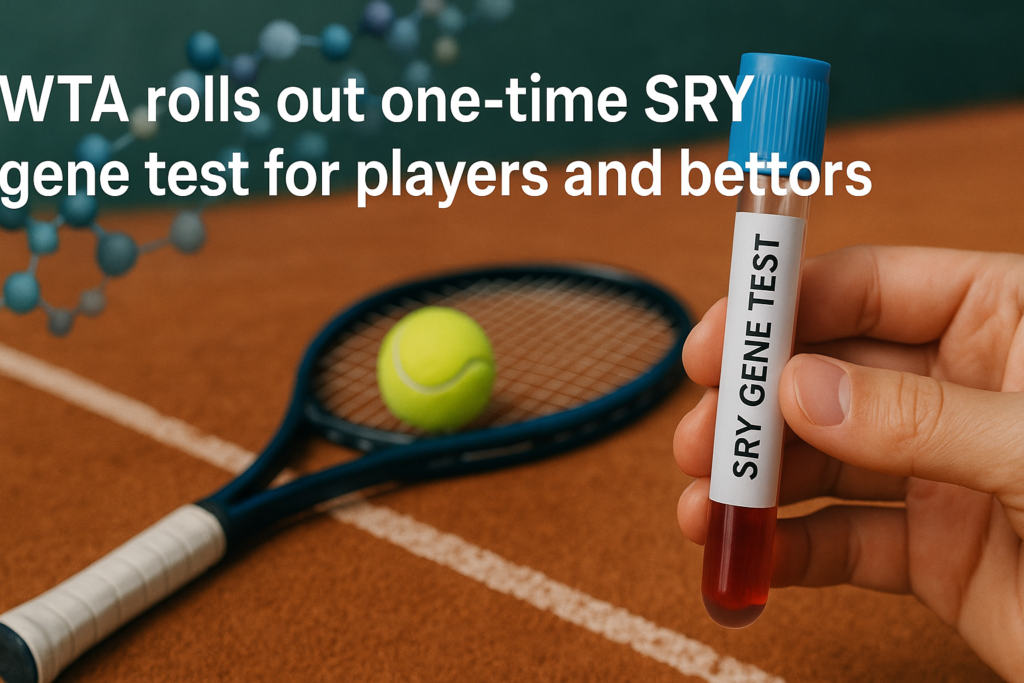
WTA Introduces Mandatory One‑Time SRY Gene Test: What Players — and Bettors — Need to Know Big news landed in July 2026: the Women’s Tennis Association rolled out a one‑time mandatory gene test for every player on the women’s tour, using a screening for the SRY gene to determine eligibility under its updated women’s eligibility policy. The change, intended to protect “the integrity of women’s professional tennis,” touches sport, science, privacy and — for those of us who follow and bet on tennis — the markets that move when the player pool changes. This article breaks down what the WTA announced, why it matters, how it works in practice, the controversy around it, and practical takeaways for players, tournament organizers and gamblers. What the WTA announced — the facts The WTA’s new policy, which began in July 2026, requires a one‑off screening specifically for the SRY gene — a gene typically found on the Y chromosome that is associated with male sex development. The policy applies to all players on the tour, not only selected or targeted athletes. According to coverage of the WTA announcement, a negative result clears a player to compete, while a positive result leads to further medical assessment and documentation before eligibility is confirmed. The tour has said the screening can be performed via cheek swab or blood test and that testing will be handled with confidentiality and data‑privacy safeguards, with a broader player‑engagement program to roll out the process. The policy is also linked to eligibility for the 2028 Los Angeles Olympics — making this more than a domestic administrative change; it has international, multi‑event implications. Read the WTA’s approach as reported by major outlets: see the reporting from ESPN on the WTA gene testing and the explanatory coverage from Al Jazeera on the policy rollout. Additional reporting and player reaction are available in pieces like the writeup at Yahoo Sports and analysis at Fox News. Why the WTA says it’s doing this — and why it matters At its core, the WTA frames the test as a measure to safeguard fair competition in women’s sport. The policy aims to provide a consistent eligibility framework for the tour and to align more closely with frameworks already being used or considered in other sports bodies, including the International Olympic Committee and World Athletics. That alignment is particularly relevant ahead of the 2028 Olympic cycle. Why does this matter in practice? In elite sport, marginal advantages can decide matches, tournament outcomes and the flow of prize money and ranking points. The WTA’s position is that a clear, standardized biological eligibility test reduces ambiguity and supports consistent decision‑making across events and jurisdictions. From a betting perspective, anything that changes who is eligible to play affects market depth, player matchups, tournament fields and — ultimately — odds. A tour‑wide test that could remove or temporarily sideline any competitor introduces a new layer of event risk that bookmakers and bettors will have to price in. How the test works — the practical mechanics According to the WTA’s description as covered in media reports, the test targets the SRY gene. Testing methods include noninvasive cheek swabs or standard blood draws. A negative screen (no SRY detected) clears a player without further action. A positive screen triggers a medical review and documentation before any eligibility decision is finalized. Key operational points the WTA has highlighted: One‑time screening: Players are tested once under the new rule rather than undergoing repeated tests for every tournament. Privacy safeguards: The tour says results will be handled confidentially, with data‑privacy protocols in place. Further medical assessment: A positive result is not an immediate ban — it initiates further assessment and documentation steps. It’s worth noting that SRY is a single marker and not a sweeping genomic profile. The WTA describes this as a targeted approach: a specific test to detect a specific gene that plays a central role in sex determination, rather than broad genetic sequencing. That technical detail has been central to both the practical rollout and the debate around the policy. Controversy, human‑rights concerns and legal questions The WTA’s move has provoked strong reactions. Human‑rights experts and activist groups have criticized mandatory testing on grounds that range from bodily privacy to discrimination and the risk of stigmatizing certain athletes — particularly people with differences of sex development (DSD) or gender‑diverse histories. Critics point out several concerns that matter legally and ethically: Privacy and medical autonomy: Mandatory genetic testing touches core privacy rights and raises questions about consent and data handling. Medical complexity: Biological sex is not binary in every case. Chromosomal, hormonal and phenotypic variations complicate any simple “positive/negative” result. Potential for exclusion: Even with further medical assessments, a positive SRY result could put athletes’ careers and livelihoods at risk depending on how eligibility is applied. The WTA has attempted to walk a tightrope: emphasizing the distinction between biological sex and gender identity and stating a lack of intent to question anyone’s dignity, while asserting a duty to protect fair competition. Still, observers caution that implementing a blanket policy for all players — rather than targeted, case‑by‑case adjudication — carries reputational and legal risks for the sport’s governing body. What this means for players — practical implications For current tour players, the immediate practical effect is straightforward: everyone will be screened once. For most players the process will be a formality — a cheek swab or blood test with a negative result clearing them to compete. For the minority whose tests return a positive SRY result, the pathway is more complex. Rather than an automatic ban, those players will enter a process of medical assessment and documentation. The details of how long that assessment takes, who reviews the evidence and what standards govern final eligibility will be critical and, at present, are the detail work the WTA must continue to publish and defend. Two practical points for players: Get informed and keep records: If you have any history of medical evaluations related to sex
Tennis abuse in 2025 linked to gambling risk and bettors
More than 12,000 abusive posts: What the 2025 social-media storm tells tennis, bettors and platforms That headline is not hyperbole: a new analysis shows female tennis players were the target of more than 12,000 abusive posts and messages during 2025. The findings are uncomfortable because they sit at the crossroads of sport, social media and gambling — three worlds that interact in volatile ways. As someone who watches the lines and reads the forums, I’ll walk you through the numbers, explain why gamblers show up so often in the abuse mix, and offer clear, practical ways players, tournaments and platforms can respond. The raw data: what the Signify analysis found Researchers using Signify Group’s Threat Matrix service analyzed social-media content throughout 2025. The service combines AI-led detection with open-source analysis to flag abusive posts. The key figures you need to know: More than 12,000 abusive posts and messages targeted female tennis players in 2025. Analysts reviewed over 1.2 million posts and comments and classified 3,726 as serious abuse — the kind that includes violent, sexual, racist or targeted threats. Platforms removed 66% of serious abuse after it was flagged during 2025. Law enforcement was engaged after escalation for 35 accounts linked to 12 individuals. Gamblers were identified as a major source: responsible for 42% of verified abuse and a staggering 59% of serious abuse. These findings are summarized in reporting by the BBC’s analysis of the Signify data and by Reuters’ coverage, which highlights the size and nature of the problem. Why gamblers feature so strongly in the abuse statistics At first glance it’s tempting to frame this as “fans acting out.” The data, however, points specifically to bettors and gambling accounts as a leading source of the most dangerous posts. Why does that happen? Here are the main mechanisms: High emotional stakes: People who have money riding on an outcome experience intense emotions in a win-or-lose moment. When the bet goes bad, online venting can escalate rapidly into threats and targeted abuse. Perceived influence: Some bettors mistakenly think they can influence players or outcomes through intimidation — an irrational idea but one that fuels targeted harassment. Anonymity and multiple accounts: Bettors can create throwaway handles or use offshore chatrooms to coordinate attacks or vent, making it harder to trace the abuse back to one identifiable source. Betting markets and volatility: In-play betting (placing bets while matches are ongoing) is extremely popular. A single call or disputed line can produce real-time anger that spills into social media and chats. Those dynamics help explain the statistic that gamblers accounted for 59% of serious abuse in the study — a blunt reminder that betting markets don’t just change odds, they change behavior. How the Signify Threat Matrix works — and what the data can’t tell us Signify’s Threat Matrix combines automated detection and human review to process huge volumes of public posts. The methodology allowed analysts to sift through the 1.2 million posts and highlight the roughly 3,700 that met the threshold for “serious abuse.” That automation is powerful but not perfect. Here’s why the nuance matters: False positives and context: AI can struggle with sarcasm, reclaimed slurs, or cultural context. Some flagged posts might be heated criticism rather than genuine threats; conversely, clever euphemisms can slip through undetected. Private channels and off-platform activity: The study analyzed public posts. Abuse that happens in private DMs, closed chats or encrypted apps won’t be counted, so the total volume could be higher. Attribution limits: The study linked some accounts to gambling activity, but linking abusive posts to a bettor’s financial motive requires careful inference. Not every abusive gambler is doing so because of a lost bet, and not every enraged fan is a bettor. Enforcement variability: The 66% removal rate is promising, but removal depends on platforms’ policies, reporting speed and the ability to act quickly. Some content can remain live for hours or days before it’s taken down. So the Signify data is an important, evidence-based snapshot — but it’s not the whole story. It tells us where to look and what to prioritize, not that we have perfectly precise answers to every question. The real consequences for players and the sport Abuse isn’t just ugly words on a screen. It has ripple effects that matter to players, organizers and the tennis economy. Mental health: Persistent threats and targeted harassment increase anxiety, distract players and can affect performance. Players speak candidly about the toll social-media vitriol takes on focus and confidence. Safety concerns: Targeted threats — especially those that are violent or specific — can require security interventions and, in some cases, police involvement (as the Signify data shows with 35 accounts escalated to law enforcement). Sponsorship and public image: Sponsors and tournament partners are sensitive to player welfare. Ongoing abuse can make sponsors reluctant to invest, or push them to demand stronger protections from events and platforms. Gendered impact: Women athletes often receive disproportionately sexualized, gendered and racist abuse. That’s not just unpleasant; it can chill participation and create broader reputational damage to the sport. When a player is constantly policing their own social feed or worried about threats after a match, it changes the experience of being a professional athlete. That’s why the numbers matter beyond clicks and headlines. What platforms, tournaments and regulators are doing — and what still needs to happen There’s progress. The Signify data shows companies removed two-thirds of serious abuse in 2025 and that some cases were referred to law enforcement. But removal is reactive — and often too late. Here’s a practical breakdown of the levers available and how they’re being used: Automated detection plus human review: AI flags content at scale; human moderators add context. The Signify Threat Matrix model demonstrates how that partnership can work, but platforms need to scale human review to reduce errors and speed enforcement. Platform policy enforcement: Stronger, clearer rules around threats, doxxing and targeted harassment help. Enforcement consistency is the issue; removal rates are encouraging but not
Becca Weissmann Named Interim LMU Women’s Tennis Coach
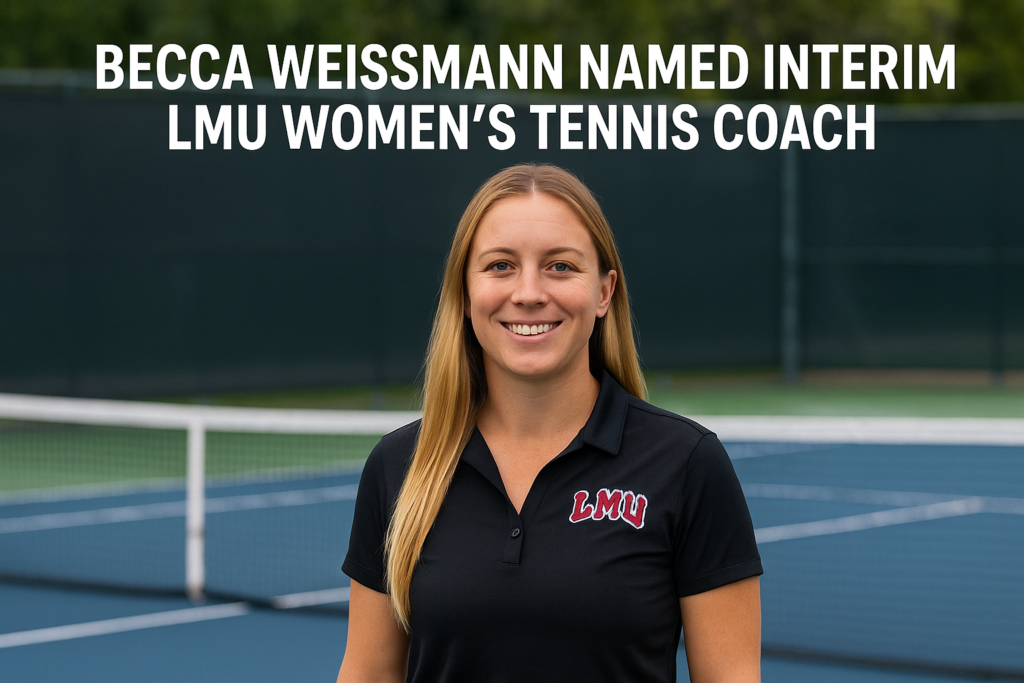
Becca Weissmann Named Interim Head Coach of LMU Women’s Tennis: What It Means for the Lions Big news in Westchester: Loyola Marymount University has promoted Becca Weissmann to interim head coach of the LMU women’s tennis program, effective immediately. If you follow LMU tennis — or just love good coaching stories — this is the kind of transition that deserves a closer look. Weissmann is not a new face in the program: she joined the staff in 2021, rose to associate head coach ahead of the 2025–26 season, and now steps into the top job during a period of momentum for the Lions. If you want to read LMU’s official announcement, check the LMU announcement. I’ll walk through why this promotion matters, what her record tells us, what “interim” really means, and what players, recruits, and fans should watch next. Why this promotion matters: continuity at a pivotal time Coaching changes can rattle a program. They can also be an opportunity to double down on what’s working. In LMU’s case, the school turned to a familiar, proven internal leader. The Athletic Director explicitly cited Weissmann’s leadership and relationships as key reasons she’s the right person to guide the team through the transition, which signals LMU’s priority: steady the ship without losing the team culture that produced recent success. That emphasis on continuity is important for a few practical reasons. First, players already know her coaching voice and practice habits, so the day-to-day disruption is minimized. Second, recruiting cycles — particularly for fall signing classes or spring transfer decisions — are sensitive to sudden staff turnover. Promoting an internal candidate like Weissmann gives recruits and current roster members a clearer picture of the program’s future direction. And third, it allows LMU to keep harnessing momentum from seasons in which they’ve performed well, including a standout 2022 campaign. Becca Weissmann’s record at LMU: the numbers that matter Let’s talk facts. During Weissmann’s tenure on staff, LMU posted 64 victories and a 59% win rate. Those numbers tell you two things: the program has been consistently competitive, and the team has been winning more often than not under the current staff framework. Numbers aren’t everything — strength of schedule, injuries, conference dynamics and roster turnover all matter — but 64 wins over a multi-year stretch is tangible progress. Her first season in the building was especially memorable: LMU reached the 2022 NCAA Tournament, finishing the year 18–4 and recording a signature win over UCLA. That season helped raise the program’s profile and showed LMU could compete against high-level Pac-12 opposition. For a mid-major program, NCAA appearances and marquee wins are recruiting currency — recruits see a program that can win and play on big stages. LMU’s recap of the 2022 season and the honors that followed provides context on how that campaign reshaped expectations; you can read the season recap and WCC honors at the LMU 2022 season recap. What “interim head coach” really means — and what to expect “Interim” sometimes makes people think of a placeholder who’s just keeping things warm until a permanent hire shows up. That can be true in some cases, but in many others (particularly when an interim is an internal promotion), the interim coach runs the full program: coaching, recruiting, staff management, and in-game decisions. The practical upshot is Weissmann will be the visible leader now — she’ll set practices, chart match plans, lead recruiting conversations, and be the main public face of LMU women’s tennis. From a player perspective, that matters because leadership clarity reduces uncertainty. For the athletic department, appointing an internal interim coach often buys time to assess long-term fit and gives the promoted coach a chance to prove they can handle the expanded responsibilities. LMU’s staff directory and roster pages are still in the process of being updated — at the time of the announcement, the staff page continued to list Agustin Moreno as head coach and Weissmann as associate head coach — so expect those official pages to reflect the change soon. You can see the current listings here: LMU coaches directory and LMU roster. Immediate priorities for an interim coach Stabilize daily routines — keep practices productive and consistent so players’ development continues. Maintain recruiting pipelines — reassure prospects and ensure commitments (or opportunities) don’t slip away. Communicate clearly — with players, support staff, the athletic department, and alumnae to build buy-in. Protect the culture that brought success — preserve team identity while preparing for whatever longer-term changes the AD may decide on. Staff and roster realities: what the public pages tell us LMU’s official pages are the first place fans and recruits look after a coaching change. As of the announcement, the program’s online staff directory still listed Agustin Moreno as head coach and Weissmann as associate head coach, which suggests web updates are pending. That’s not unusual — athletic departments often have a short lag between personnel moves and website changes, especially in the busy offseason. If you want to follow the official team info while the updates roll out, the LMU coaches directory and roster are the go-to sources: LMU coaches directory and LMU roster. For the elevation that preceded this promotion — Weissmann’s move to associate head coach ahead of the 2025–26 season — the university’s announcement at Cal LMU provides additional background: Weissmann elevated to associate head coach. Why does this matter to fans? Two reasons. First, roster stability and recruiting clarity drive on-court results more than splashy hires alone. Second, staff continuity means players who flourished under the existing system get a stronger chance to continue their development uninterrupted. Practical implications for players, recruits, and fans Short answer: expect steadiness with an eye toward growth. Longer answer: Weissmann’s promotion sends a message that LMU values internal development, both for players and coaches. For players and recruits, this helps answer the “Who will coach us?” question faster than a national search might. Here’s a quick playbook for the stakeholders who care most: Current players:
Alexandra Eala Wins Washington Title, Filipino Breakthrough
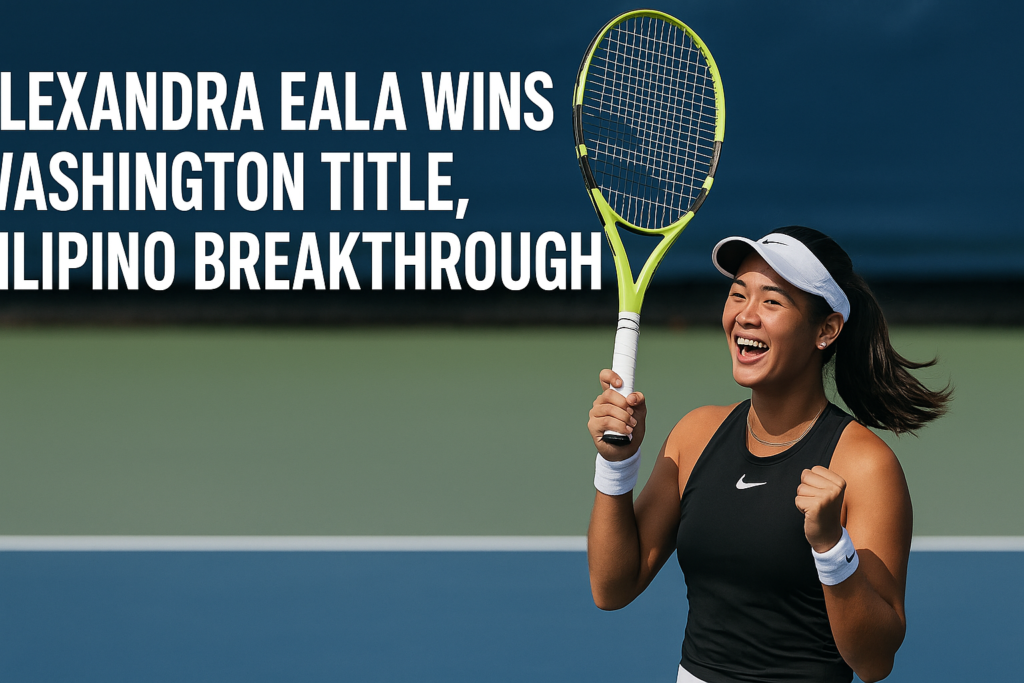
Alexandra Eala Lives Up to the Hype — Washington Win Signals a New Era for Filipino Tennis Alexandra Eala arrived in Washington with a lot of buzz and left with a trophy, headlines and a little bit of history. The 19-year-old Filipina completed a thrilling week — beating top names, surviving pressure moments and claiming her first WTA Tour singles title — becoming the first player from the Philippines to win at that level. If you’ve followed her since junior success or watched her at Wimbledon earlier this summer, the Washington run felt like the confirmation everyone was waiting for: Eala isn’t just a promising prospect, she’s a real contender. The Washington run, match by match There’s a reason sportswriters love a string of victories over marquee names. In Washington, Eala took down a sequence of established stars that would intimidate many players: Elina Svitolina, Leylah Fernandez, Naomi Osaka and Jessica Pegula. Those wins are what turned hopeful headlines into an undeniable statement. Elina Svitolina: A veteran and former world No. 3, Svitolina is a tough baseline grinder. Eala navigating past her showed composure against a player who consistently tests movement and point construction. Leylah Fernandez: The Canadian’s scrappy, counterpunching style demands patience and precision; Eala’s success against Leylah highlighted her improving tactical range. Naomi Osaka (semifinal): Beating a multi‑Grand Slam champion in a late‑stage match captured attention around the tennis world — not least because Osaka’s power and returning ability can derail many opponents. Reuters summed it up when reporting Eala’s upset of Osaka en route to the final. Jessica Pegula (final): Pegula is a top‑tier player — world No. 3 at the time — and the final tested everything about Eala: tactical change, physical endurance, and mental resilience. For a compact recap and the tournament context, the WTA’s report and the BBC’s coverage provide a good play‑by‑play of the week. Both outlets noted not just the opponents but the way Eala handled them — often rallying from behind or closing matches decisively. The final: from a set down to a dominant finish The final against Jessica Pegula was a microcosm of why this title matters. Pegula took the first set 6‑4, and the match looked — briefly — as if experience might prevail. Instead, Eala adjusted, grabbed the second set 6‑4 and then obliterated Pegula 6‑0 in the decider to complete the comeback, finishing 4‑6, 6‑4, 6‑0. That 6‑0 third set is the kind of scoreline that tells you the momentum swing wasn’t small — it was seismic. Winning the second set after dropping the first often comes down to keeping belief and tightening the tactical screws; then Eala effectively steamrolled in the final set. The WTA’s match report captures the arc of that comeback and the significance of beating a current top‑three player in such emphatic fashion: Eala completes Pegula comeback. Why this is historic for the Philippines Numbers and firsts matter in sport because they create context. Eala’s Washington trophy isn’t just personal — it’s national. As reported by multiple outlets, she is the first player from the Philippines to win a WTA Tour singles title. That’s a landmark achievement for Filipino tennis and will likely be referenced every time a young player from the country stages a breakthrough. Her rise wasn’t built in isolation. Earlier this season she made history at Wimbledon as well: Eala became the first singles player from the Philippines to reach the fourth round of a Grand Slam in the Open Era. The BBC’s feature on her Wimbledon run and the broader coverage of her Washington title both emphasize that these aren’t random flashes — they’re milestones in a sustained upward arc (BBC report). What actually makes Eala’s tennis special — beyond headlines Watching clips or reading scores gives you one view; reading match patterns gives you another. What stands out about Eala’s Washington week is the combination of varied weapons and mental adaptability. Variety in attack: Eala can step inside the baseline to take the ball early, redirect pace and flatten out groundstrokes against aggressors like Naomi Osaka. Against counterpunchers such as Leylah Fernandez, she showed patience and the ability to construct points. Return and serve adjustments: Top‑level wins often require timely returns and serve hold under pressure. The progression from losing the first set to dominating the third in the final suggests Eala made effective mid‑match adjustments, improved first‑serve percentages or returned more aggressively — the kinds of small shifts that add up. Mental toughness: Beating a player of Pegula’s calibre after dropping the opening set is a credibility builder. Closing out a second set tight and then going 6‑0 in the decider shows both belief and the capacity to exploit momentum. Those takeaways are consistent with the match reports from Reuters and the WTA, which highlighted not only the opponents she beat but the manner of the victories: both high quality and convincing in the end (Reuters coverage). How this fits into a breakout season One title doesn’t make a legacy, but it sure helps the narrative. The Washington title came on the heels of Eala’s Wimbledon breakthrough and a string of strong performances — a sequence that media outlets have framed as a genuine breakout season rather than a single lucky week. The BBC and Reuters both reported this as part of a sustained escalation in her results and level of play. What that means practically: more attention from tournament directors, a better seeding outlook at big events, and a shift in how opponents prepare for her. Players who once treated Eala as a prospect will now mark her as a dangerous opponent early in draws. A WTA title also often leads to more media exposure and off‑court opportunities, opportunities that can translate into better coaching, travel stability and resources — all of which feed back into on‑court performance. What to expect next — realistic trajectories Let’s be careful here: tennis is a sport of ups and downs, and young champions still face a steep learning
Williams Sisters Return to Cincinnati With Doubles Wild Card

Serena & Venus Williams Return to the Court Together — Women’s Doubles Wild Card at Cincinnati 2026 Stop the presses — and roll out the red carpet. Serena and Venus Williams have been granted a women’s doubles wild card into the 2026 Cincinnati Open, marking their first doubles tournament as a team since the 2022 US Open. For fans, players and anyone who loves a historic sporting moment, this is the kind of storyline that revives memories and raises questions: how rusty will they be, how dangerous, and what does this mean for Serena’s comeback after injury? What’s confirmed: the basics you need to know Here’s the short version of the headlines: the Cincinnati Open (a WTA 1000 hard‑court event in Mason, Ohio) runs in mid‑August — roughly 11–23 August in 2026 — and the sisters received a women’s doubles wild card to compete together. Their first match is scheduled a few days into the tournament, with the event officially ramping up around 13 August. These details were reported by major outlets including the BBC, Sky Sports, and The New York Times. Why this matters: history, legacy and timing Put bluntly: when Venus and Serena play together, it’s never just another match. The pair boasts 14 major women’s doubles titles and remain unbeaten in Grand Slam doubles finals. They’ve also won three Olympic gold medals as a team, credentials that make them one of the most successful doubles partnerships in tennis history. Cincinnati 2026 is notable because it’s their first doubles event together since they lost in New York at the 2022 US Open, and it will be their doubles debut at the Cincinnati Open. Those facts are part nostalgia, part narrative — and they shape expectations for the event. (See more background on Venus’s career on her Wikipedia page and the broader Williams sisters rivalry history here.) Serena’s comeback: knee injury, Wimbledon withdrawal, and what Cincinnati represents Serena, now 44, has been attempting a comeback to competitive tennis. Her most recent singles outing ended with a right knee injury sustained in July at Wimbledon during a match against Maya Joint, and she subsequently withdrew from Wimbledon doubles with Venus because of that knee issue. Cincinnati will represent Serena’s first competitive matches since Wimbledon and is her first hard‑court tournament of the summer — a key tune‑up if she’s considering a return to the US Open later in August. The timeline and injury context were reported in coverage by outlets including The New York Times and the BBC. Why does that matter? Because doubles can be a smart, lower‑stress way for a player returning from injury to get match practice: fewer court miles, shorter points on average, and a partner to cover pressure moments. But doubles also requires quick reflexes, split‑second coordination and explosive movement at the net — all relevant concerns for somebody coming off a knee issue. Venus’s schedule and workload: singles and doubles Venus, 46, has accepted singles wild cards into both the Canadian Open and the Cincinnati Open, so at Cincinnati she will be doing the singles/doubles double. That matters for load management: playing both draws in a WTA 1000 event can be physically taxing, particularly in August heat on hard courts. The sisters’ doubles match will come “a few days into the tournament,” giving Venus potentially a match or two of singles to warm up, but also increasing the risk of fatigue if rounds stack up. Coverage noting Venus’s dual entries is available from Channel News Asia and Sportsnet. How the wild card works — and why tournaments hand them out Tournaments use wild cards for many reasons: to attract star power, to reward promising young talent, to give returning players a route back in, or to spice up local interest. In this case, the Cincinnati Open has handed the sisters a wild card that serves both marketing and sporting functions: that star power brings fans and TV eyeballs, and the team itself is competitively credible given their doubles résumé. Multiple outlets, including Sky Sports and WLWT, reported the tournament’s decision. What to watch on the court: realistic expectations and X‑factors Let’s be honest: a 44‑year‑old (Serena) and a 46‑year‑old (Venus) aren’t the same athletes they were in their 20s and early 30s. But doubles is an arena where experience, anticipation and elite timing can blunt some physical decline. Here are the practical, on‑court dynamics that could decide whether this pairing is merely ceremonial or genuinely dangerous: Serve and return depth. Even if Serena’s serve no longer frequently hits the 120+ mph range, her placement and ability to open the court can create opportunities. Venus’s lefty serve is always a tactical weapon in doubles. Net IQ and poaching. The sisters have decades of playing together and unparalleled chemistry for moving and swinging as a unit at the net. Doubles points are won or lost at the net — their timing there is the real trump card. Movement and recovery after injury. Watch for Serena’s mobility, particularly lateral quickness and first steps for volley exchanges. A cautious court presence may blunt point length but reduce injury risk. Complementary roles. Venus’s court sense and Serena’s power can form a complementary pairing if they pick clear zones (one taking more net/poaching responsibility, the other anchoring baseline serve games when needed). What this means for the US Open and mixed doubles possibilities The Cincinnati event functions as the traditional lead‑in to the US Open, and for Serena it’s a final competitive check of body and game. The sisters have until 17 August to decide whether to enter the US Open mixed doubles (there are multiple entry routes: wild cards, qualifying, and direct acceptance based on rankings). The US Open mixed doubles draw is compact — 16 teams — with six pairs qualifying on singles rankings, eight wild cards, and two spots from an eight‑team qualifying event, so timing and fitness assessments at Cincinnati will inform any US Open doubles decisions. The New York Times has more on deadlines