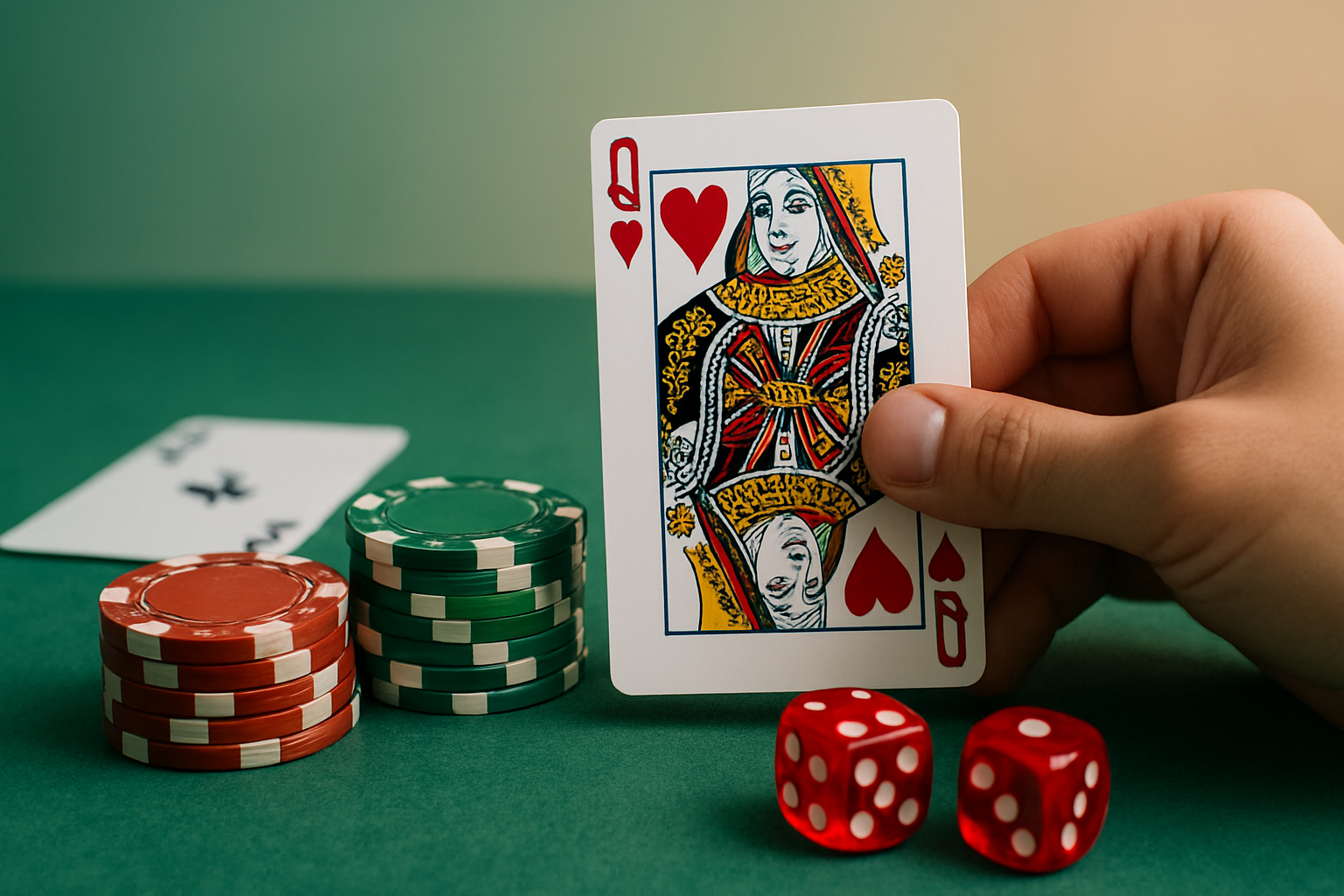
Queen in Blackjack: Why a Queen Is Always 10 Points — what it means for blackjack and your next move
Key takeaways
- A queen always counts as 10 points in blackjack, grouped with 10, J and K.
- Queen + ace is a two-card blackjack; queen + any 10-value card is a 20 and you generally stand.
- Treat pairs of queens as a hard 20 — don’t split — and play hard 12–16 carefully versus the dealer upcard.
What a queen in blackjack actually counts as
Short version: a queen = 10. Full stop.
The clear rule shows up in standard casino documentation: face cards count as ten points, identical to tens, so a queen is treated the same as a 10-value card. See the standard rules for the precise language used in many regulated game guides.
And don’t get cute about suits. Hearts, spades, diamonds or clubs do not change that value. The Washington State rules explicitly note that suit doesn’t affect the card’s score, which is why that queen of clubs hits the felt exactly the same as the queen of hearts when it comes to totals (suit doesn't affect value).
Two-card hands: queen + ace and queen + 10-value results
Some of the most meaningful outcomes in blackjack are two-card combos, and the queen plays a starring role there.
If you pair a queen with an ace, you’ve got a two-card 21 — an immediate blackjack. That’s not just good luck; that combination qualifies as the classic blackjack under standard rules (two-card blackjack).
Put a queen next to any other 10-value card — a jack, king or plain 10 — and you’ve got a 20. That’s as solid as it gets without hitting blackjack: 20 is a powerful total and one of the best outcomes you can hold before the dealer plays out their hand (20 total).
Why the queen is grouped with 10-value cards in blackjack
Playing cards are organized by rank, and casinos treat tens and face cards as one category for scoring.
It keeps the game simple and consistent: all four ranks — 10, J, Q, K — are worth ten points each. That’s why you’ll often hear dealers call them “tens” or “10-value cards.”
Grouping face cards this way simplifies payouts, dealer decisions and even card counting. When a queen pops up, it moves the same needle as a ten or a king — it’s a single unit in the game’s math.
Practical implications for basic play when you’re holding a queen
Knowing a queen is 10 points is useful, but the real value comes when you translate that into decisions.
Here are concrete, table-ready implications.
- Queen + 10-value (20): Stand. You’re almost never hitting a 20. It beats a huge swath of dealer outcomes and gives you good odds of winning the hand.
- Queen + ace (blackjack): That’s a two-card 21. Under standard rules it’s a blackjack and settles immediately according to the house’s payout rules; check the casino’s pay schedule before you sit (blackjack treatment).
- Queen + small card (hard totals): For example, queen + 6 = 16, queen + 2 = 12. These become the classic “stiff” hands: vulnerable, uncomfortable and often forcing a choice between standing and hitting depending on the dealer upcard.
- Pair of queens: That’s a hard 20. Basic strategy nearly always says don’t split tens — splitting a pair of queens gives you two weaker hands in exchange for one very strong 20.
Those aren’t theoretical micro-adjustments; they change how you react in the moment. A queen next to an ace is a handshake-and-get-paid situation. A queen next to a 6 will have you thinking about the dealer’s upcard and whether to take a hit.
How a queen affects specific actions: hitting, standing, doubling and splitting
Let’s break it into quick rules you can use at the table.
- When you have 20 (queen + any 10): Stand. Period.
- When you have a blackjack (queen + ace): The hand is resolved as a two-card blackjack per typical rules; you don’t play it out against the dealer’s hand (two-card blackjack).
- Hard 12–16 with a queen: These “stiffs” require dealer-upcard context. Versus dealer 2–6 you’ll often stand; versus 7–Ace you’re more likely to hit. The queen just gives you the hard total to evaluate.
- Doubling: Doubling opportunities aren’t affected by the queen itself; they’re dictated by the combined total. A queen plus a low card rarely produces a hand you’d double on.
- Splitting: Only possible if you’re dealt two queens. Splitting tens is an advanced move that usually reduces EV; almost every basic strategy chart recommends standing on a pair of tens.
Common mistakes players make with queens at the table
Some misreads show up repeatedly.
First, mixing up suit with value. Players sometimes think suits or face-card rank matter for scoring. They don’t. A queen is numeric value 10 regardless of hearts or clubs (suit doesn't affect value).
Second, splitting tens. You’ll meet fellow players who split a pair of queens “for action.” They usually walk away wishing they hadn’t. A pair of tens is one of the strongest non-blackjack hands.
Third, misreading insurance when the dealer shows an ace. If the dealer peeks and you don’t have blackjack, the insurance bet is a side wager that generally favors the house. A queen + ace already gives you the natural; insurance is a separate decision the queen doesn’t change.
Counting and card composition: why queens matter to counters
Card counters classify tens and face cards as the same weight because they influence the remaining composition in the shoe the same way.
When multiple tens and queens are out of the shoe, the pile left for future hands becomes richer in low cards, shifting the odds. For someone tracking composition, a queen is an immediate ten-value hit to the count — it’s not a face card with special status, it’s a ten.
That’s why the phrase “10-value cards blackjack” is common in counting conversations: every queen reduces the pool of tens equally, and that matters for bet-sizing and strategy deviations in shoe games.
Quick cheat-sheet: table rules and moves when you see a queen
- Queen = 10 points. Treat it like a 10 or king or jack.
- Queen + ace = blackjack (two-card 21).
- Queen + another 10-value = 20 — stand.
- Queen with low card (hard 12–16) = evaluate against dealer upcard; these are the hands where table strategy is most decisive.
- Two queens = pair of tens — usually do not split.
Table-check tip
If you’re unsure about how the casino pays blackjacks or handles ties, ask the dealer before you sit.
The rules document linked earlier is the definitive source for how a hand such as queen + ace is settled at that house (standard rules).
Little details that matter: dealer peeks, soft totals and side bets
Two small practicalities you’ll see at most tables:
- Dealer peek: If the dealer’s upcard is an ace, they may check for blackjack. If you hold queen + ace, that hand is the natural and settles per the house rules (two-card blackjack).
- Soft totals: A queen never creates a soft hand because a soft hand requires the ace’s ability to be counted as 1 or 11. A queen + ace is immediately a hard 21 and treated as blackjack.
- Side bets: Bets like pair-insurance and specialty wagers have their own rules and pay tables; the queen’s ten-value status will usually determine pair or suited-pair payouts, but check the table’s side-bet wording before playing.
These are small things but they affect how the dealer resolves hands and how quickly you get paid or lose a bet. Knowing the rules avoids awkward exchanges mid-hand.
How to use this knowledge at the casino — practical playing examples
Example 1: You’re dealt queen + 7 = 17 and dealer shows 10. This is a hard 17 against a strong dealer upcard.
Basic play tends toward standing on a hard 17 rather than hitting.
Example 2: You’re dealt queen + 9 = 19 and dealer shows 6. That 19 is a stand almost every time; it’s a heavy favorite to beat the dealer’s busted or lower totals.
Example 3: Queen + queen = 20, dealer shows 8. Stand. You’re already in a premium position and splitting would generally be a losing deviation.
These examples show how the queen’s static value — ten — is the anchor for practical decisions at the table. Once you think “this queen is a ten,” the moves fall into place.
Responsible note: Blackjack is a game of both math and chance. Know your limits, use table bankroll rules, and take advantage of tools at the casino like deposit or session limits where they exist.
How much is a queen in blackjack? A queen is worth 10 points, the same as other face cards and the 10, and that’s how hands are totaled (standard rules).
Does the suit matter? No — the suit doesn’t change the queen’s value (suit doesn't affect value).
Is a queen + ace treated differently than other naturals? No — that combination is a two-card blackjack and is resolved per the casino’s rules (blackjack treatment).
Enough theory — here’s the stuff you’ll want to remember when the dealer deals a queen your way: treat it exactly like any other 10-value card, don’t split tens, and be mindful when it forms a hard 12–16 because those are the moments where table context matters most.
Next, the short Q&A you can print and fold into a corner of your notes.
Conclusion
The deck isn’t trying to trick you: a queen in blackjack is always worth 10 points. That one fact — queen = 10 — explains why queen + ace is a blackjack, why queen + another 10-value is a 20, and why suits don’t matter.
Hold that in your head and the right plays follow: stand on 20, don’t split tens, and treat hard 12–16 carefully against the dealer’s upcard. That’s the practical payoff from knowing exactly what a queen is worth in blackjack.
Frequently Asked Questions
How much is a queen in blackjack?
A queen counts as 10 points in blackjack. It’s in the same category as jacks, kings and the number 10; that rule is laid out in standard game documents (standard rules).
Why does a queen count as 10?
Card ranks are grouped for simplicity: 10 and face cards all score ten points. It makes math and gameplay consistent across hands and casinos.
Does suit change a queen’s value?
No. Suits do not affect scoring or blackjack totals; the queen is ten regardless of hearts, diamonds, clubs or spades (suit doesn't affect value).
What happens if I get a queen + ace?
That’s a two-card blackjack (21). It’s paid or settled according to the house rules and usually ends the play for that hand (two-card blackjack).
Is queen + another face card worth anything special?
Queen + another 10-value card equals 20, which is a very strong total. It’s generally a stand and a high-probability winner.
Should I ever split a pair of queens?
Generally no. A pair of queens is a hard 20, and basic strategy charts virtually always recommend standing rather than splitting.
Does the queen affect side bets or insurance?
The queen’s value as a ten changes how pair or suited-pair side bets resolve, but it doesn’t change the insurance math. Insurance is a separate wager and should be considered independently.
Do face cards matter for counting?
Yes. Counters treat queens the same as tens and kings; they reduce the remaining ten-value composition in the shoe and affect count-based betting and deviations.
Can I get paid extra for a suited queen-ace combination?
Some side bets pay extras for suited naturals, but the base game resolution of queen + ace is a standard blackjack. Check the local table’s pay table for any side-bet variants.
Where can I read the official rules about a queen’s value?
Consult the casino’s published rules or regulatory documents; many jurisdictions publish standard rules online. For example, the standard game rules document lays out face-card values (standard rules), and state gaming authorities outline that suits don’t change card value (suit doesn't affect value).