Free Demo Slots Test Blood Suckers 98% RTP Safely

Free Demo Slots: Use 20,000+ No-Deposit Game Demos to Learn RTP, Volatility and Avoid High-Wager Free-Spin Traps Estimated reading time: 6 minutes Key takeaways Use free demo slots to learn a game’s RTP, volatility and bonus mechanics without risking cash. Demo sessions reveal hit frequency and bonus triggers; compare low- and high-volatility titles to see real differences. No-deposit free spins may offer cash but often carry high wagering and low max-cashout limits; read T&Cs. Why free demo slots matter for responsible play Think of demo play as practice throws in the batting cage. When you spin a slot in demo mode you can see hit frequency and bonus triggers without losing money. See the hit frequency and bonus triggers without losing money. Compare advertised RTP and real feel—does a 98% game actually feel steady or still swingy? Decide whether a slot’s volatility matches your bankroll tolerance. Those are practical, habit-forming skills that help stop you chasing a wild win. Demo play is especially useful for new players who want to learn mechanics like cascading reels, sticky wilds, and buy-features without financial pressure. Where to find free demo slots that actually show RTP and volatility If you want to play free slots with no download or sign-up, there are a few dependable go-tos. SlotsReach — roughly 5,998 demos, all playable in instant demo mode. Casino.org’s free games hub — more than 20,000 free games with RTP and volatility shown in many game summaries. Gamesville — about 650+ demos with specific game stats like RTP and volatility for sample titles. Slototimes — a catalog useful for comparing RTP and max-win numbers of popular slots. Those pages list RTP and often volatility, so you don’t have to guess what “swingy” means. If the game page says “RTP 98% — low volatility,” you can test it and confirm the actual feel in a controlled way. RTP and volatility: the two numbers that change everything Two stats matter more than anything else when you evaluate a slot in demo mode: RTP and volatility. RTP (return-to-player) is a long-run average. If a slot advertises 96% RTP, the math says that over a huge number of spins the machine returns €96 for every €100 wagered. That doesn’t mean you’ll see €96 back in a 100-spin session. RTP is a statistical anchor, not a session guarantee. Volatility tells you how that return is delivered. Low-volatility games give smaller, more frequent wins. High-volatility slots give rare, bigger hits. Concrete examples help: Blood Suckers — often cited with a 98% RTP, a classic example of low volatility and frequent small wins. 1429 Uncharted Seas — around 98.6% RTP, another low-volatility title that’s kinder to small bankrolls. Starburst XXXtreme — mid-90s RTP but higher volatility; you’ll see longer dry spells and bigger re-spins when they come. Reel Rampage — recent releases can push high volatility and big max-win potentials (Slotmill’s 15,000x style setups). TaDa Gaming demo — a title listed on Gamesville shows a sample RTP of 97.10% with medium–high volatility. Using demos, you can validate those descriptions and track patterns across many spins. Track 500 spins on a “low volatility” game and see if wins come more often. Spin 1,000 on a “high volatility” title and look for longer dry runs and occasional big payouts. That pattern recognition is exactly what demo play is good for. How to use free demo slots like a pro (practical checklist) Don’t just spin mindlessly. Treat demo sessions like experiments. Pick a goal: are you testing bonus frequency, hit size, or both? Use a session bankroll: pretend you have $50 and set an equivalent demo bet size (e.g., $0.20 spins = 250 demo spins). Count bonus triggers and record average spin win. Note the biggest win and how long it took to appear. Repeat the test on a low-volatility and a high-volatility title for comparison. That last step is the real payoff. When you see how 98% RTP low-volatility slots give small, steady returns and how the same RTP with high volatility can be a rollercoaster, you’ll make smarter choices when real money’s on the line. Sample experiment — 500 spins, $0.20 demo bet Try this experiment to gather useful data. Session bankroll equivalent: $100 (500 spins x $0.20). Record total wins, number of bonus rounds, and largest single spin win. Compare results on a low-volatility (Blood Suckers) and a high-volatility (Reel Rampage-style) title. If the low-volatility run shows many small wins and frequent bonuses but no monster hits, the game protects your bankroll better. If the high-volatility run produces long losing stretches but one or two big hits, you’ll see the swings and can decide whether you like that ride. Free demo slots vs. “free spins” bonuses: the important differences Here’s where things get sticky for novices. “Free” isn’t a single thing. Demo play is pure practice. You spin without money and don’t win withdrawable cash. “Free spins” bonuses—especially no-deposit ones—often involve real cashable outcomes, but with strings attached. Typical no-deposit free spins terms look like this: All iGaming’s 2025 report notes 10–100 spins granted on signup with winnings subject to wagering and caps. AskGamblers’ breakdown shows typical structures like 15 spins at 30x–35x wagering with $50–$100 max cashout, or 100+ spins with 50x–60x wagering and a $200–$250 cap. Other trackers report offers such as Slotastic’s 50 spins with 60x wagering and $100 max cashout, or Sloto Tribe’s 99 spins at 20x with a $70 max cashout. Those numbers matter because heavy wagering requirements and low max-cashout caps can turn a “free” hundred spins into a near-impossible hurdle to withdraw any winnings from. Compare the two options: Free demo slots: learn mechanics, check RTP/volatility, zero financial risk, no wagering hoops. No-deposit free spins: potential for cash winnings but often heavy wagering (20x–60x) and low max withdrawals ($50–$250). If your priority is learning how a game feels, demos are superior. If your priority is trying to turn a bonus into cash, read the T&Cs carefully and calculate the effective cost of wagering before
Pubs Casino top games 2026 – 1429 Uncharted Seas 98.6% RTP

Pubs Casino Top Games 2026 — The 10 Slots to Play Now (Providers, RTPs & Bonus Notes) Estimated reading time: 6 minutes Key takeaways Reviewer-sourced top-10 based on independent coverage and in-lobby “most played” signals, not an operator ranking. 1429 Uncharted Seas stands out with a documented 98.6% RTP and low volatility. The current documented no-wager spin promotion applies to Octobeer Fortune only — the top-10 titles listed are not eligible under that snapshot. Check in-lobby game info or provider paytables for official RTP and volatility before you spin. Pubs Casino top games — quick context on the lobby Start with this: the Pubs Casino lobby is slot-led. Different reviews report different catalogue sizes — from about 1,000+ slots to claims of over 5,000 titles — because independent trackers and the operator snapshot at different times. For a snapshot of variety, see a recent independent review and the provider list covered in a 2025 write-up (Studio names like Evolution, Play’n GO, NetEnt and Pragmatic Play show up across reviews). That means the top games list below is built from recurring mentions across several independent reviews and play-popularity signals — not a numbered list published by the operator. I’ll note method details near the end so you can follow how this was assembled. Pubs Casino top games — The Top 10 Slots (2026) Below are the ten games that reviewers and “most played” lists keep putting forward for Pubs Casino players. For each title I’ve included any verified RTP and volatility notes, why players like it, and whether it’s eligible for Pubs’ current no-wager spins (the Octobeer Fortune spins are the only clearly documented no-wager spin promotion right now). 1. Big Bass Bonanza RTP/Volatility: RTP not confirmed in the Pubs Casino reviews we surveyed. Why players like it: Simple hook-and-reel gameplay, familiar mechanics and a highly repeatable free-spin bonus that can produce satisfying streaks. Octobeer Fortune spins eligible?: No — Octobeer Fortune is the documented no-wager spin title for the current promotion. 2. Eye of Horus RTP/Volatility: Not published in the reviews we used. Why players like it: Classic Egyptian theme with expanding symbols and a free-spin mechanic that’s easy to follow. Octobeer Fortune spins eligible?: No. 3. Buffalo King Megaways RTP/Volatility: Not specified in Pubs-focused reviews. Why players like it: Big, cinematic reels, wide hit potential from the Megaways engine, and big-variance excitement. Octobeer Fortune spins eligible?: No. 4. Jack and the Beanstalk RTP/Volatility: RTP not listed in the review snippets we pulled. Why players like it: A NetEnt-era classic with walking wilds and a memorable treasure-hunt bonus. Octobeer Fortune spins eligible?: No. 5. Fire Joker Freeze RTP/Volatility: Not provided in the Pubs reviews; listed among “most played” in third-party coverage. Why players like it: Fast-paced, three-reel simplicity with a Freeze mechanic that locks high wins to build a streak. Octobeer Fortune spins eligible?: No. 6. The Dog House: Dog or Alive RTP/Volatility: Not specified in the Pubs Casino review summaries. Why players like it: Sticky wilds and a cute theme with volatile free spins that keep sessions lively. Octobeer Fortune spins eligible?: No. 7. 7 Gold Fruits RTP/Volatility: Listed by reviewers as highly played; no RTP quoted in our review set. Why players like it: A fruit-slot throwback with modern bells and whistles — quick spins and familiar paytables. Octobeer Fortune spins eligible?: No. 8. Wild Wild Bass RTP/Volatility: Flagged in the “most played” lists for the site; RTP not cited in the review snippets. Why players like it: Fish-and-bait charm, simple bonus mechanics and a soundtrack that fits an afternoon at the bar. Octobeer Fortune spins eligible?: No. 9. The Goonies Megaways RTP/Volatility: Appears on Pubs Casino “most played” lists and independent write-ups. Why players like it: Strong brand recognition plus Megaways volatility and stacked features. Octobeer Fortune spins eligible?: No. 10. 1429 Uncharted Seas (Thunderkick) RTP/Volatility: 98.6% RTP, low volatility — a rare high-RTP, low-volatility slot available in many European lobbies (verified in slot-roundup notes). Why players like it: Clean art, frequent modest wins, and an RTP that stands out for longer sessions. Octobeer Fortune spins eligible?: No. Why these picks? Method note on Pubs Casino top games I didn’t pull this list from a Pubs Casino leaderboard — the operator doesn’t publish a definitive “top 10” that we could verify. Instead the list is drawn from recurring mentions across independent coverage and play-popularity notes: I used independent review snapshots that list “most played” and highlight certain titles — for example, Casino.org’s review calls out a handful of high-traffic slots on the site. Other UK-focused reviews and slot roundups were used to cross-check titles noted repeatedly in 2025–2026 coverage — see a catalog review at BonusManiac and a slots-focused roundup at Dimers. Where reviewers gave specific game data (for example, RTPs and volatility), I recorded those numbers. Where a review mentions a title without technical info, I list the title and describe features players typically praise in independent commentary. The result is a defensible, reviewer-sourced “top 10” you can use to navigate the lobby without assuming the operator’s own ranking. Pubs Casino bonuses: the real terms you need to know Pubs Casino’s publicly documented welcome package (as shown on the UK site) is a 100% match up to £100, with 40x wagering on the bonus amount alone, valid for 30 days and a £5 max bet while the bonus is active. That 40x on the bonus amount is the big number — if you claimed a full £100 bonus you’d be looking at £4,000 in wagering before withdrawing the bonus-derived money. Separately, an independent review flags a popular short-term offer: 50 cash spins with no wagering on Octobeer Fortune, and any winnings paid as withdrawable cash with no maximum cashout cap. See the welcome terms on Pubs Casino’s UK page and the no-wager spin mention at an independent review for exact wording. Official welcome terms | No-wager spins mention RTPs and volatility — what to look for on Pubs Casino If you care about the math
Pubs Casino Review Crypto-Friendly Casino and Sportsbook

Pubs Casino Review — Crypto-Friendly Casino & Sportsbook: What Players Need to Know If you like your casino with a side of crypto and a sportsbook to boot, Pubs Casino probably landed on your radar. Expert reviewers often praise its modern interface and crypto-focused features, but player feedback paints a more nuanced picture — especially around withdrawals and bonus terms. This review breaks down what Pubs does well, where it trips up, and how to decide whether it fits your playstyle. Quick verdict — who should try Pubs Casino? Pubs Casino is a good match for players who prioritize: Crypto payments: If you want to deposit and withdraw with cryptocurrencies, Pubs positions itself as a crypto-friendly option. All-in-one entertainment: It pairs a casino library with sportsbook markets, which is convenient for players who move between slots, table games and sports bets. Modern UX and support: Expert sites often highlight its usability and responsive support as positives. However, if you’re a high-frequency withdrawer, a bonus hunter who expects generous, flexible promotions, or someone who dislikes verification friction, Pubs may not be ideal. Multiple reviews flag daily withdrawal limits and possible fees for extra cashouts — details that matter when you need your bankroll on demand. Product mix: casino games + sportsbook One of Pubs’ selling points is that it combines a traditional casino slate with a sportsbook. That’s handy if you like switching from live dealer blackjack to in-play football bets without jumping platforms. Expert reviews describe the interface as modern and easy to navigate, which lowers the learning curve for newcomers and keeps things flowing for experienced players. What matters: a unified account and smooth navigation matter more than flashy bells and whistles. When casinos bundle products, clunky transitions or separate wallets can ruin the experience; reviewers generally report that Pubs keeps the user journey tidy. Payments and crypto — convenient, but watch the fine print Pubs markets itself as crypto-friendly—a key attraction for players who prefer Bitcoin and other digital currencies. That said, several review aggregators and player comments mention operational constraints that affect actual access to funds: Limited daily withdrawals: Multiple sources point out that Pubs restricts the number of withdrawals you can make per day. That’s a real inconvenience if you habitually cash out small amounts throughout the day. Possible withdrawal fees: Some reviewers note a 3% charge for additional withdrawals beyond the allowed daily limit. For larger or frequent cashed-out players, that adds up quickly. Why this matters: crypto’s big selling points are speed and control. A casino that limits withdrawals or tacks on extra fees erodes those advantages. If fast, fee-free crypto movement is critical to you, confirm the exact withdrawal policy and any fees before you deposit. Bonuses and wagering terms — promising offers, restrictive conditions Bonuses are part of the draw for many online casino players, and Pubs offers promotional packages. Independent reviewers, however, flag that bonus value can be diminished by strict wagering terms: Short wagering windows: Some promotions come with a tight time limit to meet wagering requirements, which can be difficult for casual players. Other restrictive terms: As with many casinos, game weighting, maximum bet caps while wagering, and game exclusions can significantly affect how useful a bonus is. Practical tip: read the bonus T&Cs carefully — not just the headline offer. If you’re a bonus hunter, the promotional calendar might look attractive at first glance, but the value disappears if the turnover window is too short or the playthrough rules are harsh. Trust & reputation — mixed signals from experts and players Assessing trustworthiness means looking at both expert reviews and player sentiment. On the expert side, Pubs receives positive marks for usability and customer service. For example, industry review sites generally view it as a polished, crypto-forward platform — take a look at Betpack’s take for a succinct expert perspective: Betpack’s review of Pubs. On the player side, the story is more mixed. Pubs maintains a verified presence on Trustpilot and responds to negative reviews, which are good trust signals. Bitranked highlights this engagement on its review page: Bitranked’s Pubs review. But player complaints on Trustpilot and other aggregators include issues tied to withdrawal friction and verification, which are recurring themes across community feedback — see Pubs’ Trustpilot page here: Pubs’ Trustpilot page. Why it matters: a verified review profile and active PR/response team are positive. But player experiences that consistently cite the same pain points — withdrawal limits, fees, or verification hurdles — deserve weight when you choose where to play. Common pain points explained — what players actually experience Let’s unpack the most common complaints so you know what to expect if you sign up: Withdrawal restrictions: Daily withdrawal caps and chargeable extra withdrawals are mentioned in multiple reviews. That means you may not be able to access all your winnings instantly, and extra cashouts could cost you. Verification friction: Some players report protracted verification processes. That’s not unusual in crypto-friendly operations dealing with AML/KYC, but it’s worth noting if you prefer frictionless onboarding. Bonus usability: Short wagering windows and strict conditions reduce the practical value of bonuses for casual players. Reality check: these are not necessarily dealbreakers for everyone. If you’re planning to play with moderate stakes and use crypto sparingly, the limitations may be manageable. If you’re a high-volume bettor, they could be a major annoyance. Who should consider Pubs — and who should look elsewhere? Pubs works best for: Players who want crypto payment options and a sportsbook/casino combo. Casual players who don’t expect to withdraw many small amounts multiple times a day. Those who value modern UX and responsive customer support. Pubs is less suited to: Players who frequently cash out small amounts and need instant access without fees. Bonus hunters who expect flexible wagering windows and generous T&Cs. Anyone uncomfortable with potential verification delays or who needs guaranteed same-day fiat withdrawals. If you want another perspective from a bonus-focused reviewer, Bonusmaniac’s assessment of Pubs highlights similar trade-offs: Bonusmaniac’s Pubs review.
WTA rolls out one-time SRY gene test for players

WTA Introduces Mandatory One‑Time SRY Gene Test: What Players — and Bettors — Need to Know Big news landed in July 2026: the Women’s Tennis Association rolled out a one‑time mandatory gene test for every player on the women’s tour, using a screening for the SRY gene to determine eligibility under its updated women’s eligibility policy. The change, intended to protect “the integrity of women’s professional tennis,” touches sport, science, privacy and — for those of us who follow and bet on tennis — the markets that move when the player pool changes. This article breaks down what the WTA announced, why it matters, how it works in practice, the controversy around it, and practical takeaways for players, tournament organizers and gamblers. What the WTA announced — the facts The WTA’s new policy, which began in July 2026, requires a one‑off screening specifically for the SRY gene — a gene typically found on the Y chromosome that is associated with male sex development. The policy applies to all players on the tour, not only selected or targeted athletes. According to coverage of the WTA announcement, a negative result clears a player to compete, while a positive result leads to further medical assessment and documentation before eligibility is confirmed. The tour has said the screening can be performed via cheek swab or blood test and that testing will be handled with confidentiality and data‑privacy safeguards, with a broader player‑engagement program to roll out the process. The policy is also linked to eligibility for the 2028 Los Angeles Olympics — making this more than a domestic administrative change; it has international, multi‑event implications. Read the WTA’s approach as reported by major outlets: see the reporting from ESPN on the WTA gene testing and the explanatory coverage from Al Jazeera on the policy rollout. Additional reporting and player reaction are available in pieces like the writeup at Yahoo Sports and analysis at Fox News. Why the WTA says it’s doing this — and why it matters At its core, the WTA frames the test as a measure to safeguard fair competition in women’s sport. The policy aims to provide a consistent eligibility framework for the tour and to align more closely with frameworks already being used or considered in other sports bodies, including the International Olympic Committee and World Athletics. That alignment is particularly relevant ahead of the 2028 Olympic cycle. Why does this matter in practice? In elite sport, marginal advantages can decide matches, tournament outcomes and the flow of prize money and ranking points. The WTA’s position is that a clear, standardized biological eligibility test reduces ambiguity and supports consistent decision‑making across events and jurisdictions. From a betting perspective, anything that changes who is eligible to play affects market depth, player matchups, tournament fields and — ultimately — odds. A tour‑wide test that could remove or temporarily sideline any competitor introduces a new layer of event risk that bookmakers and bettors will have to price in. How the test works — the practical mechanics According to the WTA’s description as covered in media reports, the test targets the SRY gene. Testing methods include noninvasive cheek swabs or standard blood draws. A negative screen (no SRY detected) clears a player without further action. A positive screen triggers a medical review and documentation before any eligibility decision is finalized. Key operational points the WTA has highlighted: One‑time screening: Players are tested once under the new rule rather than undergoing repeated tests for every tournament. Privacy safeguards: The tour says results will be handled confidentially, with data‑privacy protocols in place. Further medical assessment: A positive result is not an immediate ban — it initiates further assessment and documentation steps. It’s worth noting that SRY is a single marker and not a sweeping genomic profile. The WTA describes this as a targeted approach: a specific test to detect a specific gene that plays a central role in sex determination, rather than broad genetic sequencing. That technical detail has been central to both the practical rollout and the debate around the policy. Controversy, human‑rights concerns and legal questions The WTA’s move has provoked strong reactions. Human‑rights experts and activist groups have criticized mandatory testing on grounds that range from bodily privacy to discrimination and the risk of stigmatizing certain athletes — particularly people with differences of sex development (DSD) or gender‑diverse histories. Critics point out several concerns that matter legally and ethically: Privacy and medical autonomy: Mandatory genetic testing touches core privacy rights and raises questions about consent and data handling. Medical complexity: Biological sex is not binary in every case. Chromosomal, hormonal and phenotypic variations complicate any simple “positive/negative” result. Potential for exclusion: Even with further medical assessments, a positive SRY result could put athletes’ careers and livelihoods at risk depending on how eligibility is applied. The WTA has attempted to walk a tightrope: emphasizing the distinction between biological sex and gender identity and stating a lack of intent to question anyone’s dignity, while asserting a duty to protect fair competition. Still, observers caution that implementing a blanket policy for all players — rather than targeted, case‑by‑case adjudication — carries reputational and legal risks for the sport’s governing body. What this means for players — practical implications For current tour players, the immediate practical effect is straightforward: everyone will be screened once. For most players the process will be a formality — a cheek swab or blood test with a negative result clearing them to compete. For the minority whose tests return a positive SRY result, the pathway is more complex. Rather than an automatic ban, those players will enter a process of medical assessment and documentation. The details of how long that assessment takes, who reviews the evidence and what standards govern final eligibility will be critical and, at present, are the detail work the WTA must continue to publish and defend. Two practical points for players: Get informed and keep records: If you have any history of medical evaluations related to sex
Tennis abuse in 2025 linked to gambling risk and bettors
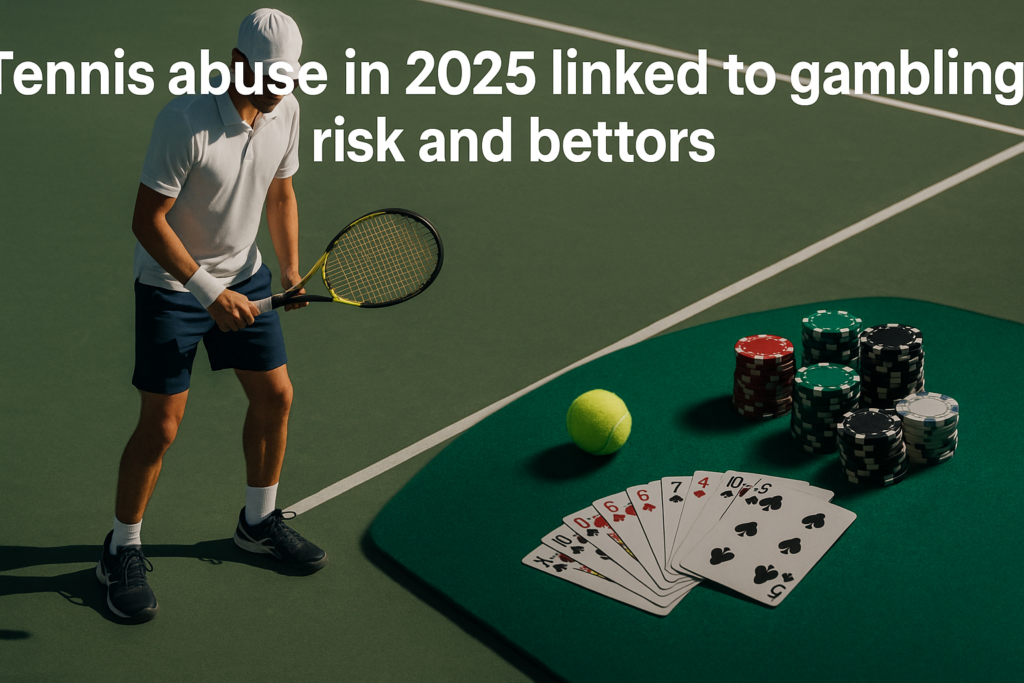
More than 12,000 abusive posts: What the 2025 social-media storm tells tennis, bettors and platforms That headline is not hyperbole: a new analysis shows female tennis players were the target of more than 12,000 abusive posts and messages during 2025. The findings are uncomfortable because they sit at the crossroads of sport, social media and gambling — three worlds that interact in volatile ways. As someone who watches the lines and reads the forums, I’ll walk you through the numbers, explain why gamblers show up so often in the abuse mix, and offer clear, practical ways players, tournaments and platforms can respond. The raw data: what the Signify analysis found Researchers using Signify Group’s Threat Matrix service analyzed social-media content throughout 2025. The service combines AI-led detection with open-source analysis to flag abusive posts. The key figures you need to know: More than 12,000 abusive posts and messages targeted female tennis players in 2025. Analysts reviewed over 1.2 million posts and comments and classified 3,726 as serious abuse — the kind that includes violent, sexual, racist or targeted threats. Platforms removed 66% of serious abuse after it was flagged during 2025. Law enforcement was engaged after escalation for 35 accounts linked to 12 individuals. Gamblers were identified as a major source: responsible for 42% of verified abuse and a staggering 59% of serious abuse. These findings are summarized in reporting by the BBC’s analysis of the Signify data and by Reuters’ coverage, which highlights the size and nature of the problem. Why gamblers feature so strongly in the abuse statistics At first glance it’s tempting to frame this as “fans acting out.” The data, however, points specifically to bettors and gambling accounts as a leading source of the most dangerous posts. Why does that happen? Here are the main mechanisms: High emotional stakes: People who have money riding on an outcome experience intense emotions in a win-or-lose moment. When the bet goes bad, online venting can escalate rapidly into threats and targeted abuse. Perceived influence: Some bettors mistakenly think they can influence players or outcomes through intimidation — an irrational idea but one that fuels targeted harassment. Anonymity and multiple accounts: Bettors can create throwaway handles or use offshore chatrooms to coordinate attacks or vent, making it harder to trace the abuse back to one identifiable source. Betting markets and volatility: In-play betting (placing bets while matches are ongoing) is extremely popular. A single call or disputed line can produce real-time anger that spills into social media and chats. Those dynamics help explain the statistic that gamblers accounted for 59% of serious abuse in the study — a blunt reminder that betting markets don’t just change odds, they change behavior. How the Signify Threat Matrix works — and what the data can’t tell us Signify’s Threat Matrix combines automated detection and human review to process huge volumes of public posts. The methodology allowed analysts to sift through the 1.2 million posts and highlight the roughly 3,700 that met the threshold for “serious abuse.” That automation is powerful but not perfect. Here’s why the nuance matters: False positives and context: AI can struggle with sarcasm, reclaimed slurs, or cultural context. Some flagged posts might be heated criticism rather than genuine threats; conversely, clever euphemisms can slip through undetected. Private channels and off-platform activity: The study analyzed public posts. Abuse that happens in private DMs, closed chats or encrypted apps won’t be counted, so the total volume could be higher. Attribution limits: The study linked some accounts to gambling activity, but linking abusive posts to a bettor’s financial motive requires careful inference. Not every abusive gambler is doing so because of a lost bet, and not every enraged fan is a bettor. Enforcement variability: The 66% removal rate is promising, but removal depends on platforms’ policies, reporting speed and the ability to act quickly. Some content can remain live for hours or days before it’s taken down. So the Signify data is an important, evidence-based snapshot — but it’s not the whole story. It tells us where to look and what to prioritize, not that we have perfectly precise answers to every question. The real consequences for players and the sport Abuse isn’t just ugly words on a screen. It has ripple effects that matter to players, organizers and the tennis economy. Mental health: Persistent threats and targeted harassment increase anxiety, distract players and can affect performance. Players speak candidly about the toll social-media vitriol takes on focus and confidence. Safety concerns: Targeted threats — especially those that are violent or specific — can require security interventions and, in some cases, police involvement (as the Signify data shows with 35 accounts escalated to law enforcement). Sponsorship and public image: Sponsors and tournament partners are sensitive to player welfare. Ongoing abuse can make sponsors reluctant to invest, or push them to demand stronger protections from events and platforms. Gendered impact: Women athletes often receive disproportionately sexualized, gendered and racist abuse. That’s not just unpleasant; it can chill participation and create broader reputational damage to the sport. When a player is constantly policing their own social feed or worried about threats after a match, it changes the experience of being a professional athlete. That’s why the numbers matter beyond clicks and headlines. What platforms, tournaments and regulators are doing — and what still needs to happen There’s progress. The Signify data shows companies removed two-thirds of serious abuse in 2025 and that some cases were referred to law enforcement. But removal is reactive — and often too late. Here’s a practical breakdown of the levers available and how they’re being used: Automated detection plus human review: AI flags content at scale; human moderators add context. The Signify Threat Matrix model demonstrates how that partnership can work, but platforms need to scale human review to reduce errors and speed enforcement. Platform policy enforcement: Stronger, clearer rules around threats, doxxing and targeted harassment help. Enforcement consistency is the issue; removal rates are encouraging but not
Becca Weissmann Named Interim LMU Women’s Tennis Coach

Becca Weissmann Named Interim Head Coach of LMU Women’s Tennis: What It Means for the Lions Big news in Westchester: Loyola Marymount University has promoted Becca Weissmann to interim head coach of the LMU women’s tennis program, effective immediately. If you follow LMU tennis — or just love good coaching stories — this is the kind of transition that deserves a closer look. Weissmann is not a new face in the program: she joined the staff in 2021, rose to associate head coach ahead of the 2025–26 season, and now steps into the top job during a period of momentum for the Lions. If you want to read LMU’s official announcement, check the LMU announcement. I’ll walk through why this promotion matters, what her record tells us, what “interim” really means, and what players, recruits, and fans should watch next. Why this promotion matters: continuity at a pivotal time Coaching changes can rattle a program. They can also be an opportunity to double down on what’s working. In LMU’s case, the school turned to a familiar, proven internal leader. The Athletic Director explicitly cited Weissmann’s leadership and relationships as key reasons she’s the right person to guide the team through the transition, which signals LMU’s priority: steady the ship without losing the team culture that produced recent success. That emphasis on continuity is important for a few practical reasons. First, players already know her coaching voice and practice habits, so the day-to-day disruption is minimized. Second, recruiting cycles — particularly for fall signing classes or spring transfer decisions — are sensitive to sudden staff turnover. Promoting an internal candidate like Weissmann gives recruits and current roster members a clearer picture of the program’s future direction. And third, it allows LMU to keep harnessing momentum from seasons in which they’ve performed well, including a standout 2022 campaign. Becca Weissmann’s record at LMU: the numbers that matter Let’s talk facts. During Weissmann’s tenure on staff, LMU posted 64 victories and a 59% win rate. Those numbers tell you two things: the program has been consistently competitive, and the team has been winning more often than not under the current staff framework. Numbers aren’t everything — strength of schedule, injuries, conference dynamics and roster turnover all matter — but 64 wins over a multi-year stretch is tangible progress. Her first season in the building was especially memorable: LMU reached the 2022 NCAA Tournament, finishing the year 18–4 and recording a signature win over UCLA. That season helped raise the program’s profile and showed LMU could compete against high-level Pac-12 opposition. For a mid-major program, NCAA appearances and marquee wins are recruiting currency — recruits see a program that can win and play on big stages. LMU’s recap of the 2022 season and the honors that followed provides context on how that campaign reshaped expectations; you can read the season recap and WCC honors at the LMU 2022 season recap. What “interim head coach” really means — and what to expect “Interim” sometimes makes people think of a placeholder who’s just keeping things warm until a permanent hire shows up. That can be true in some cases, but in many others (particularly when an interim is an internal promotion), the interim coach runs the full program: coaching, recruiting, staff management, and in-game decisions. The practical upshot is Weissmann will be the visible leader now — she’ll set practices, chart match plans, lead recruiting conversations, and be the main public face of LMU women’s tennis. From a player perspective, that matters because leadership clarity reduces uncertainty. For the athletic department, appointing an internal interim coach often buys time to assess long-term fit and gives the promoted coach a chance to prove they can handle the expanded responsibilities. LMU’s staff directory and roster pages are still in the process of being updated — at the time of the announcement, the staff page continued to list Agustin Moreno as head coach and Weissmann as associate head coach — so expect those official pages to reflect the change soon. You can see the current listings here: LMU coaches directory and LMU roster. Immediate priorities for an interim coach Stabilize daily routines — keep practices productive and consistent so players’ development continues. Maintain recruiting pipelines — reassure prospects and ensure commitments (or opportunities) don’t slip away. Communicate clearly — with players, support staff, the athletic department, and alumnae to build buy-in. Protect the culture that brought success — preserve team identity while preparing for whatever longer-term changes the AD may decide on. Staff and roster realities: what the public pages tell us LMU’s official pages are the first place fans and recruits look after a coaching change. As of the announcement, the program’s online staff directory still listed Agustin Moreno as head coach and Weissmann as associate head coach, which suggests web updates are pending. That’s not unusual — athletic departments often have a short lag between personnel moves and website changes, especially in the busy offseason. If you want to follow the official team info while the updates roll out, the LMU coaches directory and roster are the go-to sources: LMU coaches directory and LMU roster. For the elevation that preceded this promotion — Weissmann’s move to associate head coach ahead of the 2025–26 season — the university’s announcement at Cal LMU provides additional background: Weissmann elevated to associate head coach. Why does this matter to fans? Two reasons. First, roster stability and recruiting clarity drive on-court results more than splashy hires alone. Second, staff continuity means players who flourished under the existing system get a stronger chance to continue their development uninterrupted. Practical implications for players, recruits, and fans Short answer: expect steadiness with an eye toward growth. Longer answer: Weissmann’s promotion sends a message that LMU values internal development, both for players and coaches. For players and recruits, this helps answer the “Who will coach us?” question faster than a national search might. Here’s a quick playbook for the stakeholders who care most: Current players:
Bundesliga 2026-27 betting schedule playbook for traders

Bundesliga 2026–27 fixtures and schedules — a gambler’s playbook Alright, fellow punter: the DFL has dropped the 2026–27 Bundesliga calendar and fixtures, and there’s good stuff in here for anyone who likes to mix value betting with a little fixture‑spotting craft. The season runs from 28 August 2026 to 22 May 2027 and opens with a bang — Bayern Munich hosting VfB Stuttgart at the Allianz Arena on Friday night. That single fact alone shapes opening‑week markets, TV audiences and where early liquidity will sit. Below I unpack the calendar, highlight the scheduling nuggets that matter for betting (prime‑time slots, fixture congestion, the DFB‑Pokal overlap, and the earlier 2. Bundesliga kick‑off), and give practical tips you can use when sizing stakes, building accumulators, and trading in‑play. I’ll point you to the official pages so you can check the live lists yourself — always a must before you press “Place Bet.” Season snapshot: dates, format and the authoritative source The basics first. The top flight is the familiar double round‑robin: 18 clubs, 34 matchdays. The 2026–27 Bundesliga season starts on 28 August 2026 and finishes on 22 May 2027. Those dates come straight from the DFL’s calendar and fixture releases — that’s your primary source whenever there’s confusion over start dates or rescheduled rounds. For reference, the DFL’s official calendar announcement is the place to bookmark. Bundesliga 2 mirrors the top flight in format (34 matchdays) but starts earlier: its opening weekend is 7–9 August 2026, wrapping up a day later than the Bundesliga on 23 May 2027. The 2. Bundesliga matchday portal publishes the Matchday 1 line‑up and kick‑off times, which is handy if you follow promotion markets or want to trade on under‑the‑radar games early in the season. Official source: the DFL/Bundesliga season calendar and fixture publications are the definitive reference for dates and structure, so treat them as gospel when modeling schedules or mapping out futures exposure. DFL/Bundesliga calendar for the 2026–27 season Opening weekend: why Bayern vs Stuttgart matters for markets Friday, 28 August 2026, 20:30 CEST — Bayern Munich vs VfB Stuttgart. That’s the season curtain‑raiser, and it’s exactly the kind of fixture bookmakers love: a household name in a prime Friday night TV slot that guarantees big volumes. The confirmed opening match is published in the DFL’s fixture list release. Why this matters to bettors: Early market shaping: The opening fixture tends to attract sharper attention from syndicates and professional traders. Expect tighter odds and faster movement before kickoff. Prime‑time liquidity: A Friday 20:30 CEST start concentrates risk, so lines often move quickly if there’s late team news (injuries, rotations, travel issues). Cross‑market effects: Early wins/losses by Bayern can influence futures and same‑season markets (top‑four, title) immediately after Matchday 1. Other televised fixtures on Matchday 1 include a Saturday 15:30 CEST kickoff for Union Berlin vs Eintracht Frankfurt and a Saturday evening slot at 18:30 CEST for Borussia Dortmund vs Hamburg. The DFL’s kick‑off times release lists these matches as part of the first TV batch — those choices tell you where viewing figures (and therefore betting handle) will likely concentrate over that weekend. Official fixture list announcement and confirmed kick‑off times are the places to check which matchdays get the flashy slots. If you trade in‑play, you want to know which games have the biggest crowd and TV push — those tend to have the deepest markets. Bundesliga 2 starts earlier — leverage the three‑week head start The 2. Bundesliga kicks off on the weekend of 7–9 August 2026, with a Friday night opener: Bochum vs Hertha Berlin at 20:30 CEST. That head start gives value hunters two practical edges: Fresh form data: Early league fixtures provide real competitive minutes you can use to update models before the Bundesliga’s main market opens at the end of August. Less efficient markets: Second‑tier games often see softer books and wider margins versus the top flight — good for sharp players who do their homework on player movements, promotions and managerial change. The 2. Bundesliga matchday hub lays out the full Matchday 1 slate (times, venues, and kick‑offs). For anyone who likes to pair cross‑league parlays or hedging strategies across tiers, that earlier start is a chance to stake out early returns or hedge futures on promoted teams before the main betting pools arrive. Official 2. Bundesliga matchday listings: 2. Bundesliga Matchday centre. The opening fixture is also referenced in the DFL’s fixture publication. Anchor dates, DFB‑Pokal overlap and what to watch for The DFL calendar also shows a critical cluster: the DFB‑Pokal first round is scheduled from 21–24 August 2026, right before the Bundesliga debuts. That overlap matters for several reasons: Squad rotation signals: If a team fields weakened XI’s in the cup to prioritise league preparation (or vice versa), early league lines may under/overestimate real strength. Injury and fatigue carryover: Managers who go deep in the DFB‑Pokal or play tough cup ties close to the league opener can influence short‑term form and market pricing on Matchday 1. Liquidity timing: The cup has its own TV and betting audience — if a big upset happens in the Pokal, bookmakers often see cascading line adjustments in futures and same‑week markets. Mark these anchor dates on your calendar: Matchday 1 of the Bundesliga is 28–30 August 2026 and the final round is 22 May 2027. For the 2. Bundesliga, Matchday 1 is 7–9 August and the league finishes on 23 May 2027. Those endpoint dates help planning for season‑long exposure, especially if you trade title or relegation markets. Official calendar reference: 2026–27 season fixture schedules. Practical strategies: how to use the fixtures for smarter bets Let’s get tactical. A fixture list is more than dates — it’s a roadmap for where value can appear. Here are pragmatic ways to turn the 2026–27 schedule into an edge. 1) Early‑season futures and when to pounce Public interest spikes around the opening fixtures, so futures (title, top‑four, relegation) often move fast on early results. Use the 2. Bundesliga head start
Alexandra Eala Wins Washington Title, Filipino Breakthrough

Alexandra Eala Lives Up to the Hype — Washington Win Signals a New Era for Filipino Tennis Alexandra Eala arrived in Washington with a lot of buzz and left with a trophy, headlines and a little bit of history. The 19-year-old Filipina completed a thrilling week — beating top names, surviving pressure moments and claiming her first WTA Tour singles title — becoming the first player from the Philippines to win at that level. If you’ve followed her since junior success or watched her at Wimbledon earlier this summer, the Washington run felt like the confirmation everyone was waiting for: Eala isn’t just a promising prospect, she’s a real contender. The Washington run, match by match There’s a reason sportswriters love a string of victories over marquee names. In Washington, Eala took down a sequence of established stars that would intimidate many players: Elina Svitolina, Leylah Fernandez, Naomi Osaka and Jessica Pegula. Those wins are what turned hopeful headlines into an undeniable statement. Elina Svitolina: A veteran and former world No. 3, Svitolina is a tough baseline grinder. Eala navigating past her showed composure against a player who consistently tests movement and point construction. Leylah Fernandez: The Canadian’s scrappy, counterpunching style demands patience and precision; Eala’s success against Leylah highlighted her improving tactical range. Naomi Osaka (semifinal): Beating a multi‑Grand Slam champion in a late‑stage match captured attention around the tennis world — not least because Osaka’s power and returning ability can derail many opponents. Reuters summed it up when reporting Eala’s upset of Osaka en route to the final. Jessica Pegula (final): Pegula is a top‑tier player — world No. 3 at the time — and the final tested everything about Eala: tactical change, physical endurance, and mental resilience. For a compact recap and the tournament context, the WTA’s report and the BBC’s coverage provide a good play‑by‑play of the week. Both outlets noted not just the opponents but the way Eala handled them — often rallying from behind or closing matches decisively. The final: from a set down to a dominant finish The final against Jessica Pegula was a microcosm of why this title matters. Pegula took the first set 6‑4, and the match looked — briefly — as if experience might prevail. Instead, Eala adjusted, grabbed the second set 6‑4 and then obliterated Pegula 6‑0 in the decider to complete the comeback, finishing 4‑6, 6‑4, 6‑0. That 6‑0 third set is the kind of scoreline that tells you the momentum swing wasn’t small — it was seismic. Winning the second set after dropping the first often comes down to keeping belief and tightening the tactical screws; then Eala effectively steamrolled in the final set. The WTA’s match report captures the arc of that comeback and the significance of beating a current top‑three player in such emphatic fashion: Eala completes Pegula comeback. Why this is historic for the Philippines Numbers and firsts matter in sport because they create context. Eala’s Washington trophy isn’t just personal — it’s national. As reported by multiple outlets, she is the first player from the Philippines to win a WTA Tour singles title. That’s a landmark achievement for Filipino tennis and will likely be referenced every time a young player from the country stages a breakthrough. Her rise wasn’t built in isolation. Earlier this season she made history at Wimbledon as well: Eala became the first singles player from the Philippines to reach the fourth round of a Grand Slam in the Open Era. The BBC’s feature on her Wimbledon run and the broader coverage of her Washington title both emphasize that these aren’t random flashes — they’re milestones in a sustained upward arc (BBC report). What actually makes Eala’s tennis special — beyond headlines Watching clips or reading scores gives you one view; reading match patterns gives you another. What stands out about Eala’s Washington week is the combination of varied weapons and mental adaptability. Variety in attack: Eala can step inside the baseline to take the ball early, redirect pace and flatten out groundstrokes against aggressors like Naomi Osaka. Against counterpunchers such as Leylah Fernandez, she showed patience and the ability to construct points. Return and serve adjustments: Top‑level wins often require timely returns and serve hold under pressure. The progression from losing the first set to dominating the third in the final suggests Eala made effective mid‑match adjustments, improved first‑serve percentages or returned more aggressively — the kinds of small shifts that add up. Mental toughness: Beating a player of Pegula’s calibre after dropping the opening set is a credibility builder. Closing out a second set tight and then going 6‑0 in the decider shows both belief and the capacity to exploit momentum. Those takeaways are consistent with the match reports from Reuters and the WTA, which highlighted not only the opponents she beat but the manner of the victories: both high quality and convincing in the end (Reuters coverage). How this fits into a breakout season One title doesn’t make a legacy, but it sure helps the narrative. The Washington title came on the heels of Eala’s Wimbledon breakthrough and a string of strong performances — a sequence that media outlets have framed as a genuine breakout season rather than a single lucky week. The BBC and Reuters both reported this as part of a sustained escalation in her results and level of play. What that means practically: more attention from tournament directors, a better seeding outlook at big events, and a shift in how opponents prepare for her. Players who once treated Eala as a prospect will now mark her as a dangerous opponent early in draws. A WTA title also often leads to more media exposure and off‑court opportunities, opportunities that can translate into better coaching, travel stability and resources — all of which feed back into on‑court performance. What to expect next — realistic trajectories Let’s be careful here: tennis is a sport of ups and downs, and young champions still face a steep learning
Williams Sisters Return to Cincinnati With Doubles Wild Card

Serena & Venus Williams Return to the Court Together — Women’s Doubles Wild Card at Cincinnati 2026 Stop the presses — and roll out the red carpet. Serena and Venus Williams have been granted a women’s doubles wild card into the 2026 Cincinnati Open, marking their first doubles tournament as a team since the 2022 US Open. For fans, players and anyone who loves a historic sporting moment, this is the kind of storyline that revives memories and raises questions: how rusty will they be, how dangerous, and what does this mean for Serena’s comeback after injury? What’s confirmed: the basics you need to know Here’s the short version of the headlines: the Cincinnati Open (a WTA 1000 hard‑court event in Mason, Ohio) runs in mid‑August — roughly 11–23 August in 2026 — and the sisters received a women’s doubles wild card to compete together. Their first match is scheduled a few days into the tournament, with the event officially ramping up around 13 August. These details were reported by major outlets including the BBC, Sky Sports, and The New York Times. Why this matters: history, legacy and timing Put bluntly: when Venus and Serena play together, it’s never just another match. The pair boasts 14 major women’s doubles titles and remain unbeaten in Grand Slam doubles finals. They’ve also won three Olympic gold medals as a team, credentials that make them one of the most successful doubles partnerships in tennis history. Cincinnati 2026 is notable because it’s their first doubles event together since they lost in New York at the 2022 US Open, and it will be their doubles debut at the Cincinnati Open. Those facts are part nostalgia, part narrative — and they shape expectations for the event. (See more background on Venus’s career on her Wikipedia page and the broader Williams sisters rivalry history here.) Serena’s comeback: knee injury, Wimbledon withdrawal, and what Cincinnati represents Serena, now 44, has been attempting a comeback to competitive tennis. Her most recent singles outing ended with a right knee injury sustained in July at Wimbledon during a match against Maya Joint, and she subsequently withdrew from Wimbledon doubles with Venus because of that knee issue. Cincinnati will represent Serena’s first competitive matches since Wimbledon and is her first hard‑court tournament of the summer — a key tune‑up if she’s considering a return to the US Open later in August. The timeline and injury context were reported in coverage by outlets including The New York Times and the BBC. Why does that matter? Because doubles can be a smart, lower‑stress way for a player returning from injury to get match practice: fewer court miles, shorter points on average, and a partner to cover pressure moments. But doubles also requires quick reflexes, split‑second coordination and explosive movement at the net — all relevant concerns for somebody coming off a knee issue. Venus’s schedule and workload: singles and doubles Venus, 46, has accepted singles wild cards into both the Canadian Open and the Cincinnati Open, so at Cincinnati she will be doing the singles/doubles double. That matters for load management: playing both draws in a WTA 1000 event can be physically taxing, particularly in August heat on hard courts. The sisters’ doubles match will come “a few days into the tournament,” giving Venus potentially a match or two of singles to warm up, but also increasing the risk of fatigue if rounds stack up. Coverage noting Venus’s dual entries is available from Channel News Asia and Sportsnet. How the wild card works — and why tournaments hand them out Tournaments use wild cards for many reasons: to attract star power, to reward promising young talent, to give returning players a route back in, or to spice up local interest. In this case, the Cincinnati Open has handed the sisters a wild card that serves both marketing and sporting functions: that star power brings fans and TV eyeballs, and the team itself is competitively credible given their doubles résumé. Multiple outlets, including Sky Sports and WLWT, reported the tournament’s decision. What to watch on the court: realistic expectations and X‑factors Let’s be honest: a 44‑year‑old (Serena) and a 46‑year‑old (Venus) aren’t the same athletes they were in their 20s and early 30s. But doubles is an arena where experience, anticipation and elite timing can blunt some physical decline. Here are the practical, on‑court dynamics that could decide whether this pairing is merely ceremonial or genuinely dangerous: Serve and return depth. Even if Serena’s serve no longer frequently hits the 120+ mph range, her placement and ability to open the court can create opportunities. Venus’s lefty serve is always a tactical weapon in doubles. Net IQ and poaching. The sisters have decades of playing together and unparalleled chemistry for moving and swinging as a unit at the net. Doubles points are won or lost at the net — their timing there is the real trump card. Movement and recovery after injury. Watch for Serena’s mobility, particularly lateral quickness and first steps for volley exchanges. A cautious court presence may blunt point length but reduce injury risk. Complementary roles. Venus’s court sense and Serena’s power can form a complementary pairing if they pick clear zones (one taking more net/poaching responsibility, the other anchoring baseline serve games when needed). What this means for the US Open and mixed doubles possibilities The Cincinnati event functions as the traditional lead‑in to the US Open, and for Serena it’s a final competitive check of body and game. The sisters have until 17 August to decide whether to enter the US Open mixed doubles (there are multiple entry routes: wild cards, qualifying, and direct acceptance based on rankings). The US Open mixed doubles draw is compact — 16 teams — with six pairs qualifying on singles rankings, eight wild cards, and two spots from an eight‑team qualifying event, so timing and fitness assessments at Cincinnati will inform any US Open doubles decisions. The New York Times has more on deadlines
Worst Plays of the 2026 World Cup and Betting Lessons

Worst Plays of the 2026 World Cup: Flops, Fumbles and Tactical Trainwrecks Okay, pull up a chair — we’re going to talk about the World Cup’s uglier moments. Not the stunning upsets or the last‑minute genius, but the plays, matches and campaigns that made fans groan, pundits shout and bettors curse their screens. Whether you were watching at the bar, at home, or holding a futures ticket that just evaporated, there’s a certain guilty fascination in cataloguing the “worst” of a tournament. I’m coming at this as someone who watches games for fun and studies them the way a bettor studies lines — with a focus on what went wrong and why it matters. Below I group the lowlights into four readable buckets: teams that simply shouldn’t have been there, matches that were tactical snoozefests, individual moments that swung games into chaos, and the metrics that help separate an honest bad day from a truly terrible performance. I also drop a few practical notes for anyone who had money on these outcomes — because in gambling, a “worst play” often equals a painful lesson. Worst Teams and Tournament Runs: When the whole story is a disaster Sometimes a national team does more than lose; it gets dismantled across a whole week or two. Statistically and stylistically, Tunisia and Qatar are the two names that kept coming up in media rundowns of 2026’s low points. Tunisia’s campaign was brutal. Multiple outlets pointed to their defensive collapse as the central issue; a widely circulated highlight reel noted Tunisia conceded 12 goals in three group games, a number that frames their run as historic in the wrong way. The consensus is that a tough group (Netherlands, Japan, Sweden) isn’t a moral excuse for such a goal difference — tactical structure, mentality and individual execution were all off. Newsweek’s tournament wrap even labeled Tunisia “the worst team of the 2026 FIFA World Cup,” stressing both their goal difference and lack of attacking threat. Read the Newsweek assessment here: Newsweek: Who was the worst team at the 2026 FIFA World Cup?. Qatar’s outing was a different kind of mess — less about being outclassed by talent and more about losing discipline. After scraping a point against Switzerland, they were obliterated 6–0 by Canada in a game that many called “the ugliest match of the World Cup.” The match featured moments of frustration that spilled into fouls and ill‑discipline, leaving the feeling that Qatar’s players simply couldn’t maintain composure under pressure. That performance is also captured in Newsweek’s wrap. Beyond those two, several teams that arrived with hopes underperformed dramatically. Sports Illustrated’s piece on the “Six Biggest Disappointments of the 2026 World Cup” points out how squads with pedigree or reasonable expectations produced lifeless, conservative football that embarrassed managers and confounded fans. For bettors and analysts, these are important reminders: pre‑tournament reputation doesn’t guarantee in‑tournament coherence. Worst Matches and Tactical Duds: When coaching wins the ugly game There’s ugly football, and then there’s expertly ugly football — matches where coaches out‑strategize entertainment into extinction. Two games that cropped up in every “worst match” conversation were Czech Republic 1–1 South Africa and Spain vs Uruguay. The Czech vs South Africa match in Atlanta felt like a clinic in how an early goal can kill a game. After a bright start and an early Czech strike, the match flatlined: slow tempo, poor execution in the final third, and an absence of ideas from both sides. The New York Times (Athletic) framed it bluntly: “was it the worst game of the World Cup?” The piece’s point isn’t just snark — it’s a useful example of how tactical caution and lack of creativity feed on each other to produce a spectacle that’s almost painful to watch. See the NYT take here: NYTimes/Athletic: Czech Republic v South Africa takeaways. Then you had the Spain vs Uruguay showdown — a match billed as a tactical heavyweight bout that ended up as a lifeless stalemate. Video analysts and wide‑eyed fans called it “arguably the worst World Cup game ever played,” with both teams inviting tactical paralysis. Spain’s possession was sterile; Uruguay’s counter‑plan was to concede initiative and clog every channel. The result was boos. That’s a rare thing at a World Cup stadium — and a clear illustration of a phenomenon I like to call “tactical over‑correction”: when both camps prioritize risk‑avoidance so much that the match becomes void of any real attacking intent. Individual Moments That Defined “Worst Play” If teams and matches tell the broader stories, individual moments are the micro‑dramas bettors remember (and sometimes curse). The Round of 16 had a handful of signature “what were they thinking?” plays, and each one teaches something about decision‑making under pressure. Take the U.S. exit against Belgium. The match ended 4–1, but one moment summed the collapse up: goalkeeper Matt Freese came out of his box to chest down a long pass, misplayed it, and handed Belgium a decisive chance at a critical juncture while the U.S. was chasing the game. NBC Sports’ analysis called the exit “awful,” and USA Today ranked Freese’s miscue among the worst moments of the round. That sort of error is textbook gambler’s nightmare — it’s low‑probability, high‑impact, and completely changes in‑game lines and live betting markets. See USA Today’s roundup here: USA Today: Five worst moments from the World Cup round of 16. Another U.S. subplot: Weston McKennie, who had a reputation for energetic midfield disruption, was simply off. NBC reported McKennie won only 1 of 7 duels in that game — a revealing stat that signaled the USA’s midfield never established control. That kind of individual underperformance is often the hinge on which a team’s tournament turns. Read NBC’s perspective here: NBC Sports: What we learned from the USMNT’s exit. Then there are moments of baffling game‑management. Brazil’s blockbuster saw Neymar convert a late penalty against Norway and — instead of quickly resetting to chase the game — indulge in a prolonged confrontation with the